Light Meter Offers Simplicity

December 23, 2009 by admin  
Filed under Meters & Testers

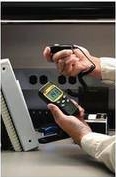
digital light meterThe IDEAL Digital Light Meter (61-686) precisely measures incandescent, fluorescent, metal halide, high-pressure sodium and halogen lamp output, yet carries an MSRP of only $139 (U.S.), or about 25% less than competitive light meters with similar feature-sets.

The meter is extremely easy to use. Simply place its remote sensor in the area to be measured, press the “on” button and the light level will appear on the LCD read-out. Values can be saved on the LCD by pressing the Data Hold button or the Max Hold button to capture the maximum value.

Hard-to-reach areas are no problem thanks to the meter’s remote sensor with 1.5 meter cable. When finished, the compact meter easily slips into a pocket or the provided tool tote. The meter is shipped with a standard 9V battery.

www.idealindustries.com

Measuring Cells Built for Low Pressure, Dusty & Wet Environments
December 23, 2009 by admin  
Filed under Green Engineering, Meters & Testers

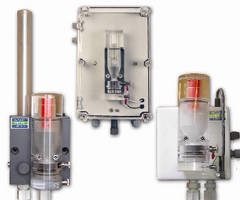
Michrochem2Severn Trent Services has added three new measuring cells to the Series KC4000 product line, now offering economical and reliable on-line measurement for low pressure, dusty and wet environments and high temperature applications. The Series KC4000 measuring cells are used in conjunction with the MicroChem®2 transmitter/controller to measure residual chlorine (free and total), chlorine dioxide, ozone, iodine and bromine. No pH correction is needed when measuring free chlorine (pH 4 – 7.5), chlorine dioxide, or ozone. Optional pH, conductivity, and/or ORP measurements are also available and can be measured simultaneously with most KC versions. The system is ideal for measuring disinfectant levels in potable water at water treatment plants and cooling systems, industrial water or any other situation where the suspended solid and salinity levels are low.

The expanded Series KC4000 cells include a measuring cell for low pressure samples at 0.1 – 0.5 bar (1.4 – 7 psig), a cell with IP 66 case that provides protection against dust and water, and a cell for hot water applications at 35.6°F to 149°F (2°C – 65°C). The Series KC4000 cell is mounted on a differential pressure regulator and includes a PT100 temperature probe. They operate in a sample range of 0.5 – 4 bar/7 – 60 psig and temperature from 35.6°F to 104°F (2°C – 40°C); ambient temperature is to 50°C.

www.severntrentservices.com

Software Developed for Mobile WiMAX Testing
December 17, 2009 by admin  
Filed under PC-based Test Equipment, Test Equipment

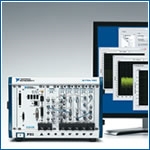
National Instruments introduced the NI Measurement Suite for Mobile WiMAX (IEEE 802.16e-2005), a software suite that engineers can use with modular RF instrumentation for automated testing of Mobile WiMAX devices. With this software suite, engineers can perform Mobile WiMAX component and device testing faster than with traditional instruments, and with better accuracy and greater flexibility.

Mobile WiMAXBased on PXI Express instrumentation powered by multicore technology, the suite can perform error vector magnitude (EVM), power and spectral measurements three to five times faster than traditional instruments. PXI WiMAX test systems from National Instruments also provide a low-cost, R&D-grade instrumentation alternative to traditional instruments. With a typical residual EVM accuracy of -46 dB at 3.5 GHz (-10 dBm), this test system can perform significantly more accurate measurements than alternative production test-grade instruments. Additionally, the suite provides engineers enhanced flexibility with the same equipment used for testing Mobile WiMAX devices to test hardware that complies with other standards such as Fixed WiMAX, wireless local area network (WLAN), GPS, and GSM/EDGE/WCDMA cellular standards.

The Measurement Suite for Mobile WiMAX supports channel bandwidths from 1.25 to 28 MHz and fast Fourier transform (FFT) sizes 128, 256, 1024 and 2048, as well as all Mobile WiMAX modulation types with both convolution coding and turbo convolution coding. The Measurement Suite for Mobile WiMAX also can generate or analyze signals with up to eight zones and 16 bursts. Combined with the NI PXIe-5663E RF vector signal analyzer and NI PXIe-5673 RF vector signal generator, the measurement suite also provides continuous frequency coverage from 85 MHz to 6.6 GHz.

By including the NI Signal Analysis Toolkit for Mobile WiMAX and the NI Signal Generation Toolkit for Mobile WiMAX, the suite offers programming APIs and virtual instrument panels for signal generation and analysis in programming environments including the NI Lab VIEW graphical system design platform. In addition to a LabVIEW API, the toolkits install with an equivalent C-style API for engineers using C, C++, .NET, or similar programming language.

The Measurement Suite for Mobile WiMAX supports multiple PXI hardware configurations to meet different application needs. A standard NI test bundle for Mobile WiMAX includes anNI PXIe-5663 6.6 GHz vector signal alayzer, NI PXI e-5673 6.6 GHz vector signal generator, NI PXIe-1075 18-slot high-bandwidth chassis and a NI PXIe-8108 dual-core controller to provide high-performance flexibility to a variety of automated test systems.

www.ni.com

Data Management Solutions for pH & Ion Measurements
December 16, 2009 by admin  
Filed under Meters & Testers

Mettler Toledo introduced LabX Direct pH software for data management of pH and ion measurements.

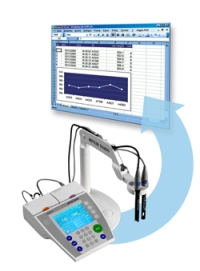
Data ManagerLab X Direct pH software provides flexible data transfer to easily send data from any Mettler Toledo SevenGo, SevenEasy, or SevenMulti meter (Version 2.0) to Microsoft EXCEL or any other Windows-based application. With fast, easy installation and setup, users can begin capturing measurement and calibration results efficiently and reliably within minutes.

LabX Direct gives users a choice of parameters to transfer. Select the data and layout format from a list for transfer to your EXCEL spreadsheet (or some other application).

LabX Direct supports the connection of a barcode reader to help reduce errors and speed up your work. Easily capture sample IDs and lot numbers with a barcode reader and then add the IDs to your measurement results.

An easy-to-use EXCEL template is provided together with Lab X Direct pH. Place the cursor into the EXCEL template, start a measurement or transfer data from the instrument’s memory, and Lab X Direct pH transfers the users measurement or calibration data to EXCEL. The measurement results are visualized as an on-line measurement curve. The EXCEL template can also be customized to users’ needs.

www.mt.com

Lab Brick Generates Signals for Portable Testers
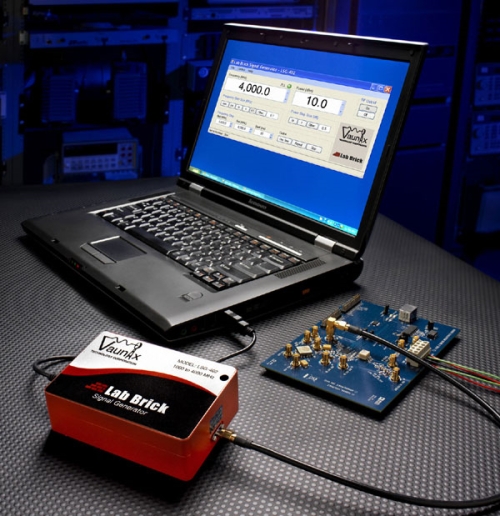
The Lab Brick® family of USB-compatible signal generators cover frequencies from 50 MHz to 6 GHz in a fraction of the cost and size of traditional test signal sources.

lab brickSignal generators are essential to most test systems, but they are typically too large and expensive for portable measurement applications. In cases where portability is important, the Lab Brick® family of signal generators from Vaunix Technology Corporation includes five low-cost, compact models covering a total range of 50 MHz to 6 GHz with high output levels and excellent spectral purity. They can be powered and controlled by means of a Universal Serial Bus (USB) equipped personal computer (PC) or laptop computer, or operate under battery power or with a remote power supply for embedded or automated applications.

The five members of the Lab Brick® signal generator family are models LSG-251 (50 to 250 MHz), LSG-152 (250 to 1500 MHz), LSG-222 (500 to 2200 MHz), LSG-402 (1000 to 4000 MHz), and LSG-602 (1500 to 6000 MHz). Each Lab Brick® signal generator (Fig. 1) measures 4.90 x 3.14 x 1.59 in. (124 x 80 x 40 mm) and weigh less than 1 lb. (0.45 kg). It can be connected to a host computer by means of a standard USB cable and controlled by means of Graphical User Interface (GUI) software run on the host computer. The simple GUI features large display windows to quickly view and adjust the signal generator’s frequency and amplitude.

The Lab Brick® signal generators each deliver at least +10 dBm output power across their full operating-frequency ranges. Signals are available at an SMA connector, and output levels can be adjusted via the GUI software over a control range of 50 dB (-40 to +10 dBm) for the 6-GHz model LSG-602 and 55 dB (-45 to +10 dBm) for the other four models. Output-level settings are accurate within +1.5 dB and -0.5 dB. In addition to controlling output levels, the GUI allows an operator to complete shut off the signal generator’s output power. Frequency can be set with 100-kHz resolution, with initial accuracy (before aging) of better than ±2 PPM.

In spite of being low-cost, portable units, these high-performance signal generators boast low phase noise and excellent spectral purity. For the 250-to-1500-MHz model LSG-152, for example, the single-sideband (SSB) phase noise is typically -95 dBc/Hz offset 10 kHz from the carrier and -115 dBc/Hz offset 100 kHz for the carrier (Fig. 2). For the 50-to-250-MHz model LSG-251, the phase noise is typically -105 dBc/Hz offset 10 kHz from the carrier and -125 dBc/Hz offset 100 kHz from the carrier. For the 1000-to-4000-MHz model LSG-402, the phase noise is typically -85 and -105 dBc/Hz, respectively, at 10- and 100-kHz offsets, while for the 1500-to-6000-MHz model LSG-602, the phase noise is typically -75 and -95 dBc/Hz, respectively, at 10- and 100-kHz offset frequencies. For all models, harmonics are typically -10 dBc while spurious content is typically -80 dBc.

The Lab Brick® signal generators include a green LED status indicator to show connection to a USB host computer. When the host computer recognizes a Lab Brick® signal generator, it loads the GUI software and displays that signal generator’s serial number and model number. The GUI software can track and control several connected Lab Brick® signal generators, simplifying multiple-signal test setups. In addition, each Lab Brick® signal generator can store settings in internal memory, allowing it to power up in a specific instrument state. This same capability also allows a Lab Brick signal generator to be used in an embedded or remote instrument application without USB control required to achieve a given instrument state. In non-USB applications, the Lab Brick® signal generators can operate with battery power or remote power supply. For automatic-test-equipment (ATE) applications, a programming guide is available for each Lab Brick® signal generator. In addition, they are programmable by means of LabView software drivers from National Instruments (www.ni.com).

A Lab Brick® signal generator provides several operating modes, including continuous-wave (CW) and swept-frequency operation. In CW mode, the sources deliver a fixed-frequency, sinusoidal output signal. In the swept-frequency mode, the generators can perform a single sweep or continuous sweeps across a user-defined frequency band in user-defined frequency steps. A user can define not only the frequency step size but the frequency dwell time.

The RoHS-compliant signal generators are supplied in rugged aluminum housings complete with mounting holes. Lab Brick® signal generators comply with international requirements for electromagnetic-compatibility (EMC) emissions and immunity for Class A ISM devices to ensure that they don’t interfere with other ISM-band equipment. Each Lab Brick® signal generator is shipped with a 6-ft.-long USB cable and a USB flash memory drive containing the GUI software and a software file copy of the user manual. Lab Brick® signal generators can be used with any PC or laptop computer with USB 2.0 port (or powered USB hub) and running the Windows 2000, XP, or Vista operating system.

www.vaunix.com

ipot Testers Now Offer Optional RS-232 Serial Interface.
December 9, 2009 by admin  
Filed under Meters & Testers, Test Equipment

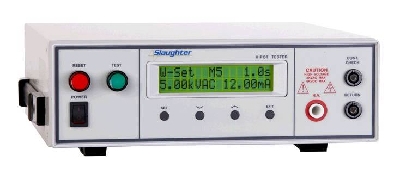
Announced today by Slaughter Company is the 2nd generation of Slaughter’s 2900 series of Hipot Testers. These new testers offer enhanced features including an optional RS-232 serial interface. The series feature three different models: the 2955 AC Hipot Tester, the 2965 AC/DC Hipot Tester, and the 2975 AC / DC Hipot with built-in Insulation Resistance testing.

hipotAn RS-232 interface is available as an optional feature and now allows for the direct connection of the Hipot Tester to a PC. This provides users with the benefit of being able to setup the instrument remotely through the PC which allows for quick and accurate configuration of all test parameters. In addition to this in compliance with many safety agency requirements it becomes a very simple process to download all test results directly to a PC for record keeping of electrical safety tests. The addition of RS-232 to the 2900 series now gives users the benefit of automation in a Hipot tester with a low price point.

In addition, the 2900 series provides a simple menu control that allows users to quickly and easily set up tests. It also offers 10 program memories to easily store and recall different test setups. This is a benefit for manufacturers that have multiple products on the same production line, eliminating the need to re-program the tester each time a different product needs to be tested.

Mini Datalogger Provides 1,000 Measurements/sec.
December 9, 2009 by admin  
Filed under Featured, Meters & Testers

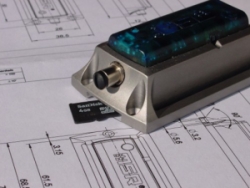
Mini dataloggerFour integrated analogue inputs, a measurement rate of up to 1000/s plus a huge memory capacity of more than 1bn measurement parameters – these, together with its compact and small format, are the key characteristics of the new from MSR Electronics GmbH.

True to its motto “Highest performance packed into the smallest format”, the Swiss technology firm enhances its series of versatile MSR miniature dataloggers with the addition of the new analogue MSR160 measurement device. According to Wendelin Egli, Dipl.-Ing. HTL (Graduate Engineer), head of development at MSR Electronics GmbH, the MSR160 meets the considerable demand from customers for a mini-logger featuring analogue inputs and a memory capacity of over 1bn measurement parameters using an optional microSD card.

Minilogger with maximum flexibility

With the MSR160 datalogger, sensors can be connected to the integrated analogue inputs, ensuring maximum flexibility for a multitude of measurement tasks (e.g. CO2, conductivity, pH etc). The analogue inputs (0 to 3.0V, 12 bit) of this universal quality logger can be used to connect conventional sensors with analogue outputs. In addition, a multiple output switching power supply is also provided. The MSR160 is used for example, in the automotive industry (vehicle manufacture and development), in measurement and testing applications for railways and trains and also in the environmental technology sector. Its robust small format is ideally suited to outdoor applications in particular – for example measurements at wind power and other energy installations. With the corresponding sensors connected, the MSR160 is equally suited for applications in the food processing industry, laboratory technology or in patient monitoring.

MSR160 – technical specification

Mini datalogger_2The MSR160, which is also available as a waterproof version, features a measurement rate of up to 1000/s. The basic datalogger model includes four analogue inputs. It can be further expanded by adding up to four different optional sensors for temperature, humidity, pressure and attitude. If required, external sensors (temperature, humidity or pressure) can be fitted to replace the internal ones. A memory capacity of over 2 million parameters is standard; using an optional microSD card the MSR160’s recording and storing capacity can be enlarged to over 1bn measurement parameters. The lightweight device (approx. 80g) has an anodised aluminium case and a 900mAh rechargeable lithium polymer battery. All saved data can be rapidly transferred to a PC or laptop via the USB interface. The user-friendly data acquisition and analysis software is supplied free along with the datalogger.

www.msr.ch

Transparent Reciever Provides Pin-Point Alignment
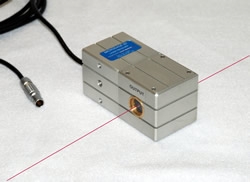
Pinpoint Laser Systems® is introducing the “Transparent” Receiver to the Microgage 2D family. This receiver allows a laser beam to pass clearly through it while making a precise position measurement for aligning machinery and equipment was introduced last fall has since been improved. The receiver is compact and will fit into small places for bore alignment, checking extruder barrels, shaft bearings and much more. Both receivers and the host Laser Microgage 2D are versatile and can be adapted to many industrial measuring and alignment tasks.

transparentThe method of operation is simple – a narrow laser beam provides a measuring reference line and these receivers determine the position of a machine or sub-assembly relative to this laser reference beam. These new receivers will operate over distances of 100 feet or more and deliver a measuring precision of 0.0005 inch; ideal for demanding industrial alignment applications. The Laser Microgage system and these newest receiver additions are well suited for lathe and spindle alignment, checking machine tool runout, roll and web alignment, precision bore alignment and much more. The Microgage 2D is easy to use with instructions that show up on the display guiding the operator through their alignment project. Several simple accessories allow for alignment of straightness, runout, parallelism, squareness, roll & web alignment, shaft & bore alignment, flatness measuring and much more.

The 2 Axis Laser Microgage operates on batteries for added convenience and all components are machined of solid aluminum with a hard anodized coating for wear resistance. A sealed push button keypad and large LCD display make the Microgage 2D easy and convenient to use in demanding industrial environments. A serial and USB interface connect to a laptop or PC and link to popular spreadsheets for plotting and analyzing data for maintenance records, customer compliance and other uses. This Microgage system includes a compact carrying case to store the components and is easily carried right out onto the manufacturing floor.

transparent2

Bi-Directional Turbine Flow Meter System

December 7, 2009 by admin  
Filed under Sensing

Flow Technology, Inc. released the FT-BD turbine flow meter system. An accurate solution for measuring bi-directional flow in a wide range of liquid applications, this advanced system can also compensate for viscosity changes due to variations in ambient fluid operating temperature, which affect the accuracy of flow measurement data.

bidirectionalIn various industrial and test & measurement processes, bi-directional flow presents difficult challenges for flow metering equipment. For example, utility pumping and circulating plants pump dielectric fluid into underground electrical cables in order to dissipate heat generated by high-voltage power lines. This application involves monitoring upstream and downstream flow rates. It also requires a precise method of viscosity compensation as the dielectric temperature changes.

Employing Flow Technology’s FT Series turbine flowmeter paired with the LinearLink(TM) Temperature Compensated Interface (TCI), the FT-BD system provides bi-directional flow measurements in a host of hydraulic, pneumatic and pumping applications. The FT Series meter is an ideal choice when high accuracy, compact size and fast response are critical. The LinearLink TCI is a sophisticated electronics platform for flow meter linearization, viscosity correction and density compensation.

With the FT-BD system, an FT Series turbine flow meter with a bi-directional Universal Viscosity Curve (UVC) calibration employs dual RF/RTD pickoffs for determining flow direction and sensing temperature. The LinearLink TCI’s innovative, temperature-compensated linearization technique reduces viscosity effects on K-factors by calculating fluid viscosity through real-time temperature measurements and proper calibration methods.

As an alternative, the FT-BD system can be employed with Flow Technology’s SL9100 Series Flow Computer. This powerful unit can be configured to display volumetric or mass units of measure with UVC and Strouhal-Roshko temperature compensation for variations in viscosity and density due to temperature. The SL9100 can output a 4-20 mA flow measurement signal to the user’s data acquisition system and display digital read-outs via a panel-mount display.

www.ftimeters.com

Tester Measures Chloride With Worry-Free Accuracy

December 4, 2009 by admin  
Filed under Meters & Testers

CHLOR*RID International, announced at the Workboat Show in New Orleans, Chlor*Ion Meter, a patent-pending hand-held digital testing device that electronically measures chloride with an internal ion specific electrode for accurate worry-free testing.  Designed specifically for the surface preparation industry, Chlor*Ion Meter digitally tests for dangerous chloride contamination and corrosion on surfaces in workboats, highways, bridges, railroads, aircraft, ships, dams, and tanks.  It simply revolutionizes Chloride testing for safer corrosion-free surfaces.

Internal Electrode Makes Units More Rugged for Field Use — Lower Cost per Test

Chlor*Ion Meter employs an internal ion-specific electrode for more rugged field use (all other devices utilize an external electrode on a cord, which can get immediately damaged in the field).  Chlor*

Ion Meter’s ion electrode is extremely accurate, measuring chloride with lab quality results every time.  Based on CHLOR*RID’s popular Chlor*Test, the Chlor*Ion Meter now digitally measures chloride in surfaces, removing operator error caused when either the testing tube is not read correctly or results are recorded incorrectly.  In addition, Chlor*Ion Meter dramatically reduces the cost per test by eliminating the need for a glass titrator tube as needed with non-digital tests.  Record keeping is far faster, easier and more accurate.
www.chlor-rid.com

Next Page »