Aliasing can have different meanings depending upon the context. For example, in computer programming it refers to instances where a computer program uses two or more different labels in different parts of the program to refer to the same data location. If the location is modified using one label, the change may cause difficulties in parts of the program that don’t refer to it using that label.
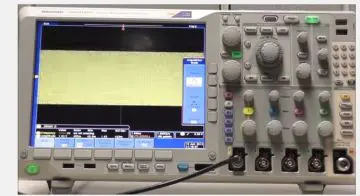
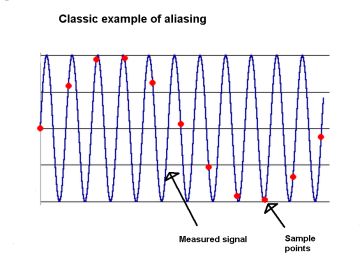
In signal processing, aliasing is a different phenomenon. It takes place in the course of analog-to-digital conversion when two totally different signals, having different frequencies, appear to be identical when the sampled versions of them are compared. Thus they are aliases of one another.
We have all seen in old western movies, rapidly spinning wagon wheels that appear to be turning backward. This effect comes from the opening and closing of the camera shutter, which may be considered a form of sampling. The position of the wheel spokes is rendered in isolated fragments that are not in the correct order so that backward motion is simulated. This is known as temporal aliasing.
Spatial aliasing can also arise, as when a brick wall for no apparent reason acquires a moiré pattern.
Aliasing is generally considered a bad thing, unless it is intentionally used to create ambience or tolerated in the interest of more efficient storage.
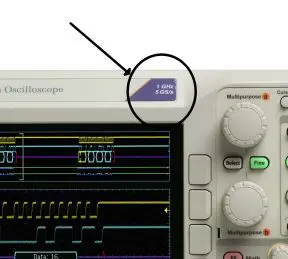
Aliasing can result in distorted or even false waveforms in a digital oscilloscope display. If the sampling rate is insufficient to permit unambiguous reconstruction, aliasing results. Aliasing becomes an increasingly greater problem when the signal to be displayed has a higher frequency, and it is mitigated by a higher sampling rate, which is equivalent to a shorter sample interval. This is a key metric of any digital oscilloscope. For example, the sample rate is printed on the front panel of the Tektronix MDO 3104 – 5gS/sec.
 A greater sample rate comes at a cost, which is that more memory is required to store a signal at a given time duration. A waveform’s time duration is a function of the horizontal scale setting, which may be expressed as units of time per division. To find the number of samples that will need to be stored in an oscilloscope’s memory, multiply the sampling rate times the units of time per division, times the number of divisions along the X-axis (normally 10).
To keep a lid on memory length requirements, the simple solution is to reduce the sampling rate. Various methods for performing this reduction are known as acquisition modes. One method is the sample acquisition mode, whereby excess samples are simply deleted. Needless to say, a downside of this approach is that some valuable information may be lost. To remedy this dilemma, a strategy known as peak acquisition may be used. High and low peaks from adjacent sample intervals are retained in the oscilloscope memory.
Another solution is known as the high-resolution acquisition mode. This approach involves averaging of sample points within a specific sample interval. It improves vertical resolution at the expense of obscuring glitches that may be sought and also it reduces bandwidth. However, it reduces noise, improves vertical resolution and functions as an anti-aliasing filter.
In addition to the above single-acquisition modes, it is possible to combine multiple (consecutive) acquisitions to build a high-quality composite display, much as digital photographers combine separate shots to average out camera shake.

Leave a Reply
You must be logged in to post a comment.