• Skip to primary navigation
  • Skip to main content
  • Skip to primary sidebar
  • Skip to footer
  • Advertise
  • Subscribe

Test & Measurement Tips

Oscilloscopes, electronics engineering industry news, how-to EE articles and electronics resources

  • Oscilloscopes
    • Analog Oscilloscope
    • Digital Oscilloscope
    • Handheld Oscilloscope
    • Mixed-signal Oscilloscope
    • PC-based Oscilloscopes – PCO
  • Design
  • Calibration
  • Meters & Testers
  • Test Equipment
  • Learn
    • eBooks/Tech Tips
    • FAQs
    • EE Training Days
    • Learning Center
    • Tech Toolboxes
    • Webinars & Digital Events
  • Video
    • EE Videos
    • Teardown Videos
  • Resources
    • Design Guide Library
    • Digital Issues
    • Engineering Diversity & Inclusion
    • Leap Awards
    • White Papers
  • Subscribe
You are here: Home / spectrum analyzer / SoC generates RF test signals and analyzes results

SoC generates RF test signals and analyzes results

June 23, 2023 By Martin Rowe Leave a Comment

The Apollo MxFE software-defined signal processing SoC from Analog Devices digitizes and generates analog signals with DSP in between. Applications cover aerospace & defense, instrumentation, and wireless communications.

Digitizing high-speed signals, processing them, and creating responses typically requires separate ADCs, DACs, and DSPs or FPGAs. The Apollo MxFE system-on-chip (SoC) combines signal capture, creation, and processing into a single device surrounded by a support ecosystem. Figure 1 shows the Apollo MxFE architecture.
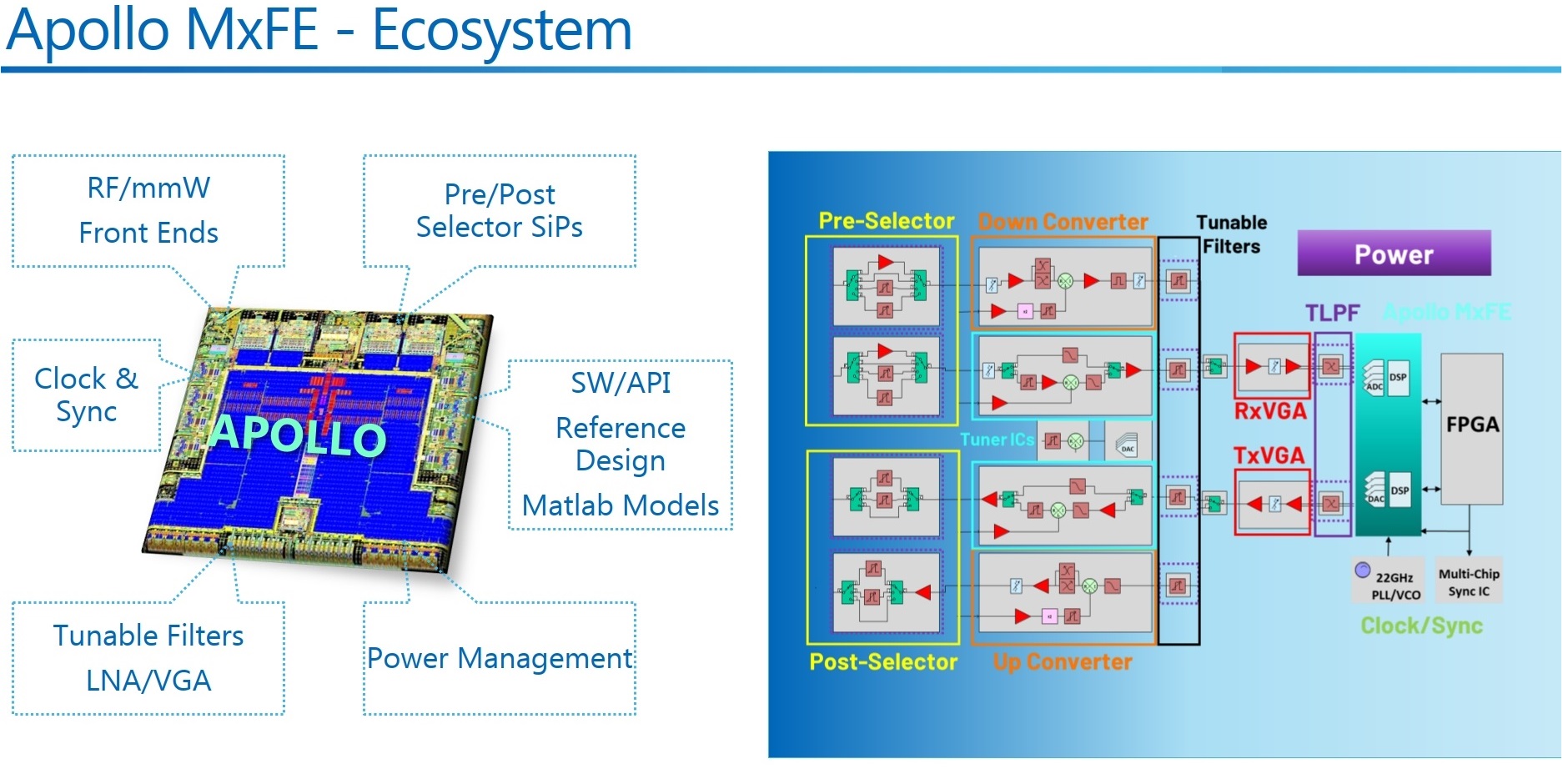
Figure 1. Apollo MxFE directly digitizes signals up to 10 GHz (16 resolution, four channels) or 4 GHz (12 bits over 8 channels).

Introduced at the 2023 International Microwave Symposium, the Apollo MxFE AD9084 contains four 20 Gsample/sec, 16-bit ADCs and four 28 Gsample/sec DACs, while the AD9088 contains eight 12-Bit, 8 Gsample/sec RF ADCs and eight 16-Bit, 16 Gsample/sec RF DACs. Both devices contain on-chip signal processing and the software support you need to program the DSP to analyze or create RF signals for phased array radar, electronic surveillance, test and measurement, and 5G/6G. The four/eight ADC/DACs let you develop phased-array systems with 4T/4R or 8T/8R elements. Figure 2 shows an 8T/8R phased-array radar application.
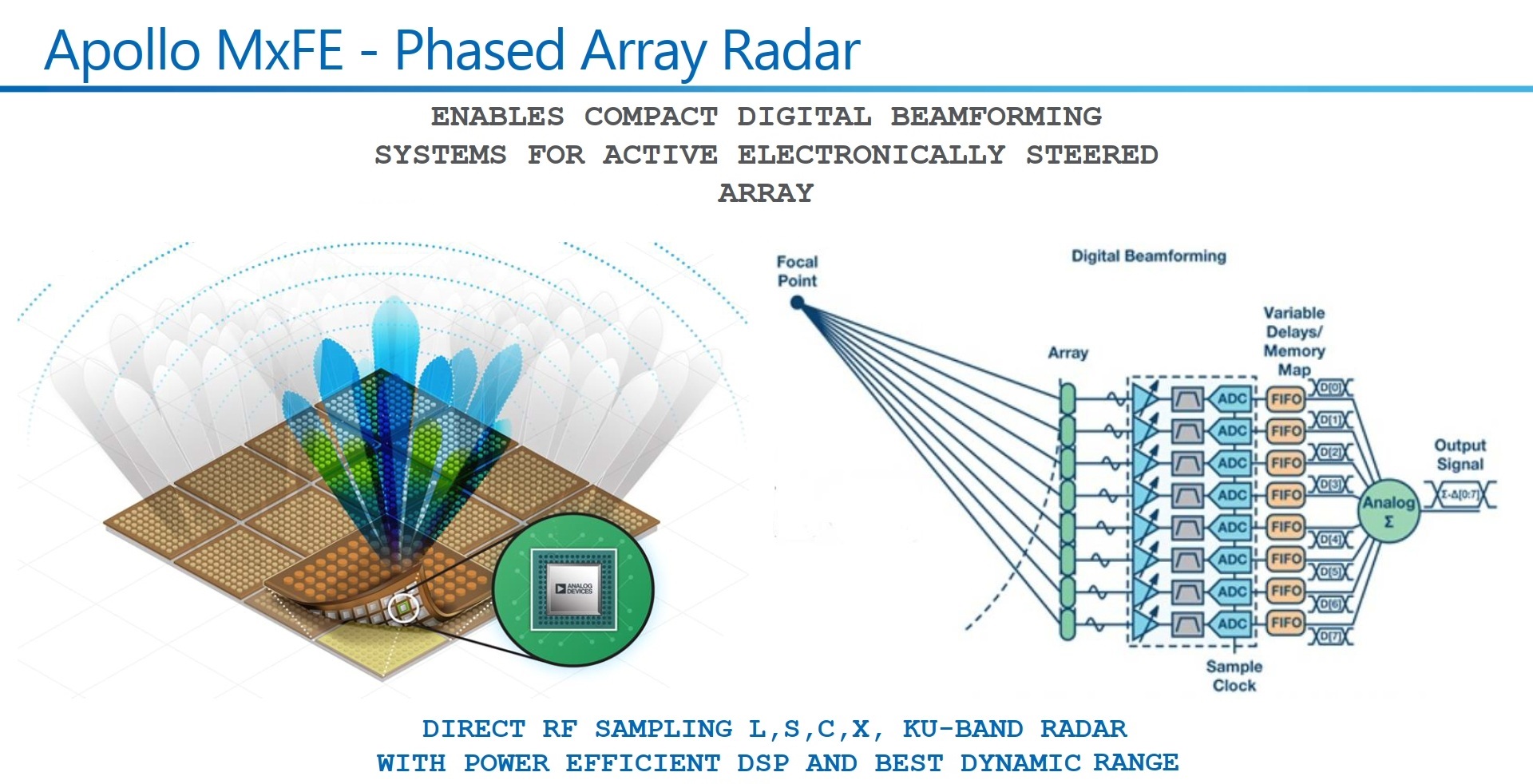
Figure 2. On-chip DSP adds functions such as filters and beamformers.

An increase in data-intensive applications has boosted the need for wider bandwidths and more rapid processing and analysis of data at the network edge. The AD9084 lets you directly digitize RF signals to 10 GHz, which covers 5G FR1, Wi-Fi, Bluetooth, radar, and other wireless signals. On-chip signal processing — putting Analog Devices back in the DSP business — lets you create or analyze software-defined modulation for analog or digital RF signals without the need for external up-converters or downconverters. On-chip signal processing lets you add filters, beamformers, FFTs, and other functions. For more signal and data processing, you can add an external FPGA. Figure 3 shows Apollo operating as a spectrum analyzer at IMS 2023.

Analog Devices Apollo
Figure 3. The Analog Devices Apollo SoC shown in a spectrum analyzer demonstration at IMS 2023.

In addition to the four-channel and eight-channel SoCs, the Apollo MxFE ecosystem consists of the following products:

  • A PLL/VCO synthesizer with a fundamental frequency output of up to 22 GHz, temperature stability (0.06 ps/°C), and <1 ps alignment resolution.
  • A power-delivery network that includes the LTM4702 8 A µmodule regulator. It features Analog Devices’ Silent Switcher 3 technology, which combines an ultra-low noise reference with Silent Switcher architecture to achieve high efficiency with wide-band noise performance, maximizing overall Apollo MxFE ecosystem performance.
  • A 10-channel synchronizer that can synchronize signals to within 5 ps, providing simultaneous sampling across multiple Apollo MxFE on the same card or across different chassis. The synchronizer also supports two-dimensional system synchronization (fanout and/or daisy chain architectures).
  • Companion TxVGA and RxVGA solutions provide Apollo MxFE with +15 dB of gain and the transition from single-ended to differential on Rx as well as differential to single-ended on Tx.

Both devices contain an SPI interface and high-speed control interface (HSCI) compliant with JESD204B (20 Gb/sec)/JESD204C (232.5 Gb/sec) using 24 lanes for Rx, 24 lanes for Tx.

Filed Under: Analyzer, Communication Test, signal generator, spectrum analyzer, wireless test equipment Tagged With: analog devices

Reader Interactions

Leave a Reply Cancel reply

You must be logged in to post a comment.

Primary Sidebar

Featured Contributions

Why engineers need IC ESD and TLP data

Verify, test, and troubleshoot 5G Wi-Fi FWA gateways

How to build and manage a top-notch test team

How to use remote sensing for DC programmable power supplies

The factors of accurate measurements

More Featured Contributions

EE TECH TOOLBOX

“ee
Tech Toolbox: Connectivity
AI and high-performance computing demand interconnects that can handle massive data throughput without bottlenecks. This Tech Toolbox explores the connector technologies enabling ML systems, from high-speed board-to-board and PCIe interfaces to in-package optical interconnects and twin-axial assemblies.

EE TRAINING CENTER

EE Learning Center
“test
EXPAND YOUR KNOWLEDGE AND STAY CONNECTED
Get the latest info on technologies, tools and strategies for EE professionals.
bills blog

RSS Current Electro-Tech-Online.com Discussions

  • Steering angle sensor question
  • factory device from 2017'ish with web ui - too old to function with Microsoft Edge ?
  • renewed interest in old project I call it WICKED 8
  • flexible copper cable
  • Sears 40/20 200amp starter/battery charger switch pinout

Footer

EE World Online Network

  • 5G Technology World
  • EE World Online
  • Engineers Garage
  • Analog IC Tips
  • Battery Power Tips
  • Connector Tips
  • EDA Board Forums
  • Electro Tech Online Forums
  • EV Engineering
  • Microcontroller Tips
  • Power Electronic Tips
  • Sensor Tips

Test & Measurement Tips

  • Subscribe to our newsletter
  • Advertise with us
  • Contact us
  • About us

Copyright © 2026 · WTWH Media LLC and its licensors. All rights reserved.
The material on this site may not be reproduced, distributed, transmitted, cached or otherwise used, except with the prior written permission of WTWH Media.

Privacy Policy