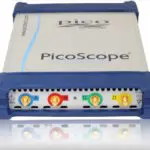
USB oscilloscopes are highly versatile instruments. With the right software, they can perform functions usually reserved for spectrum analyzers and digitizers. In some cases, however, special instruments are needed for optimal results. This FAQ compares the functions of oscilloscopes, spectrum analyzers, and digitizers with USB interfaces. They are called USB devices because they connect to […]
PC-based Oscilloscopes - PCO
What hardware accessories can you attach to a USB oscilloscope?
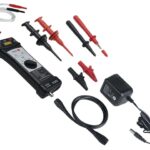
A wide range of hardware accessories are available for USB oscilloscopes. This FAQ reviews a few of the more popular options including a variety of probes plus wireless synchronization of multiple USB oscilloscopes and chassis that can combine and synchronize USB oscilloscopes with other instruments like arbitrary waveform generators and multimeters. Probes and more probes […]
What specialist software is available for USB oscilloscopes? part 2
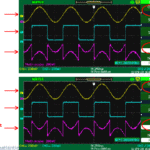
This FAQ looks at software that can synchronize multiple oscilloscopes, perform mathematical functions, and transform a basic USB oscilloscope into multiple instruments. A USB oscilloscope consists of signal capture and conditioning electronics, a personal computer (PC) that can be a laptop, tablet, or desktop, plus PC software. The availability of application specialist software is a […]
What specialist software is available for USB oscilloscopes? part 1
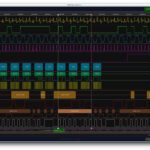
USB oscilloscopes capture analog and digital signals. Through software, engineers can analyze protocols and logic signals. By adding a D/A converter, a USB oscilloscope can also become a waveform generator. A USB oscilloscope consists of the signal capture and conditioning electronics package, a personal computer (PC) that can be a laptop or tablet unit, or […]
What’s a USB oscilloscope?
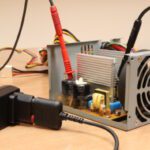
By connecting to a computer, a USB oscilloscope lets engineers offload screens and compute-intensive functions to the host, which reduces needed bench space and brings portability. Oscilloscopes are sometimes grouped into three types, benchtop, portable, and USB. The first two types are self-contained, but USB oscilloscopes are not. They consist of the electronics that capture […]
Applying PC-based test & measurement instruments

For some features, PC-based scopes sport higher performance than similar benchtop instruments. Trevor Smith, Pico Technology The debugging and validation of electronic systems calls for versatile instruments with wide-ranging functions and easy programmability. An engineer working on high-speed logic signals one day might be called upon to run a long-duration soak test the following day […]
Test and measurement in education
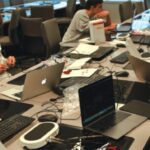
Lab classes become much more meaningful when students can operate their own test instruments rather than watch an instructor turn knobs and push buttons. Paul Cracknell, Liquid Instruments Consider the typical EE lab in the average university. Labs must be outfitted with costly equipment to give students exposure to the breadth of measurements that characterize […]
Protocol analyzer, multi-Instrument mode and FPGA programmability added to Moku:Go
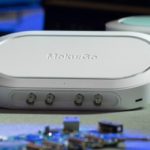
An array of new features have been added to Moku:Go, Liquid Instruments’ complete engineering lab solution for engineers and students, and updates to features on Moku:Pro, the company’s integrated platform for the most demanding research and engineering applications. The enhancements broaden the capabilities of Liquid Instruments’ flagship software-defined products, making high-performance features more accessible to […]
Embedded real-time scopes sport I3C protocol-based hardware triggers
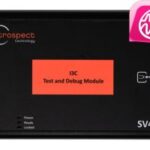
I3C PurVue Analyzer is a full-fledged, embedded, protocol-triggered real-time oscilloscope for measuring and characterizing sensor and processor interfaces based on the MIPI Alliance I3CSM and I3C Basic Specifications. This ground-breaking product provides exact time correlation between analog and digital, complete protocol-based control on when to capture a real-time oscilloscope waveform, and leverages the Python libraries […]
PC-based VNAs get automated E-Cal, TRL/TRM calibration
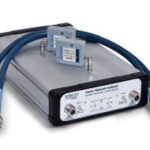
The PicoVNA 108 8.5 GHz analyzer now includes automated E-Cal calibration and TRL/TRM calibration. The PicoVNA 108 achieves calibration automation through either male SMA or female SMA E-Cal modules. These are USB-powered and controlled to electronically select the various short, open, load and through reference standards as they are needed within the calibration process. You […]