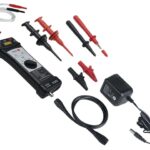
A wide range of hardware accessories are available for USB oscilloscopes. This FAQ reviews a few of the more popular options including a variety of probes plus wireless synchronization of multiple USB oscilloscopes and chassis that can combine and synchronize USB oscilloscopes with other instruments like arbitrary waveform generators and multimeters. Probes and more probes […]
picotechnology
What are the important specifications of USB oscilloscopes: Part 2?

USB oscilloscopes can be highly useful design, development, and testing tools. Like many tools, they need to be optimized for specific use cases. This second FAQ looks at specifications for triggering, input ranges and probes, zooming, and control software. Part 1 considered specifications for the number and types of channels, bandwidth, sample rate, refresh rate, […]
What specialist software is available for USB oscilloscopes? part 2
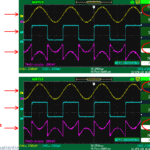
This FAQ looks at software that can synchronize multiple oscilloscopes, perform mathematical functions, and transform a basic USB oscilloscope into multiple instruments. A USB oscilloscope consists of signal capture and conditioning electronics, a personal computer (PC) that can be a laptop, tablet, or desktop, plus PC software. The availability of application specialist software is a […]
BNC interface lets piezoelectric sensors hook up to data acquisition gear

A new interface allows the use of IEPE sensors on all data acquisition devices with a 1-MΩ BNC interface. The TA487 IEPE Signal Conditioner is a simple adaptor that allows any PicoScope or oscilloscope to capture and measure signals from a large selection of piezo-electric IEPE sensors, such as the Pico Technology TA095 accelerometer. Integrated […]
Applying PC-based test & measurement instruments

For some features, PC-based scopes sport higher performance than similar benchtop instruments. Trevor Smith, Pico Technology The debugging and validation of electronic systems calls for versatile instruments with wide-ranging functions and easy programmability. An engineer working on high-speed logic signals one day might be called upon to run a long-duration soak test the following day […]
PC-based VNAs get automated E-Cal, TRL/TRM calibration
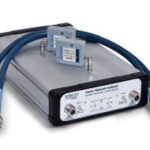
The PicoVNA 108 8.5 GHz analyzer now includes automated E-Cal calibration and TRL/TRM calibration. The PicoVNA 108 achieves calibration automation through either male SMA or female SMA E-Cal modules. These are USB-powered and controlled to electronically select the various short, open, load and through reference standards as they are needed within the calibration process. You […]
PicoScope software adds SMBus and SBS serial decoders

Pico Technology has added another protocol to both PicoScope 6 (Stable) and PicoScope 7 (Early Access) implementations: MIPI I3C Basic specification waveforms can now be decoded, displayed, and analyzed on any PicoScope with sufficient bandwidth and memory depth. I3C is a medium-speed control and data bus interface for connecting peripherals to an application processor in […]
New protocol decoders for PC-based scopes

Four new protocol decoders/analyzers–MIL-STD-1553, CAN J1939, Quadrature encoded and Parallel bus decoders–are included with the latest PicoScope 6 software (6.14.54) for Windows, Linux and macOS operating systems. The same decoders have also been added to PicoScope 7, the next-generation PicoScope user interface. (PicoScope 7 Early Access program gives users access to the software during the […]
Software lets data loggers/scopes stream data to cloud storage

The PicoLog Cloud data logging software enables any Pico data logger or real-time oscilloscope to save data to a local disk or stream the capture directly to a secure online Cloud store. Uers can set up and control captures on a source PC and then remotely view them on any number of client devices running […]
Sorting out PC-based instrumentation
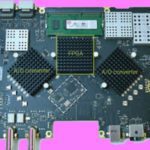
It used to be the case that only a few kinds of relatively simple instruments were based on PCs. Now several categories of lab-grade instrumentation take the PC approach. Trevor Smith, Pico Technology The diversity of measurements that must be made by electronics engineers constitutes a huge challenge. The debugging and validation of components and […]